

Most people assume UI/UX design is something you learn in college or after you start working in tech. We wanted to challenge that idea.
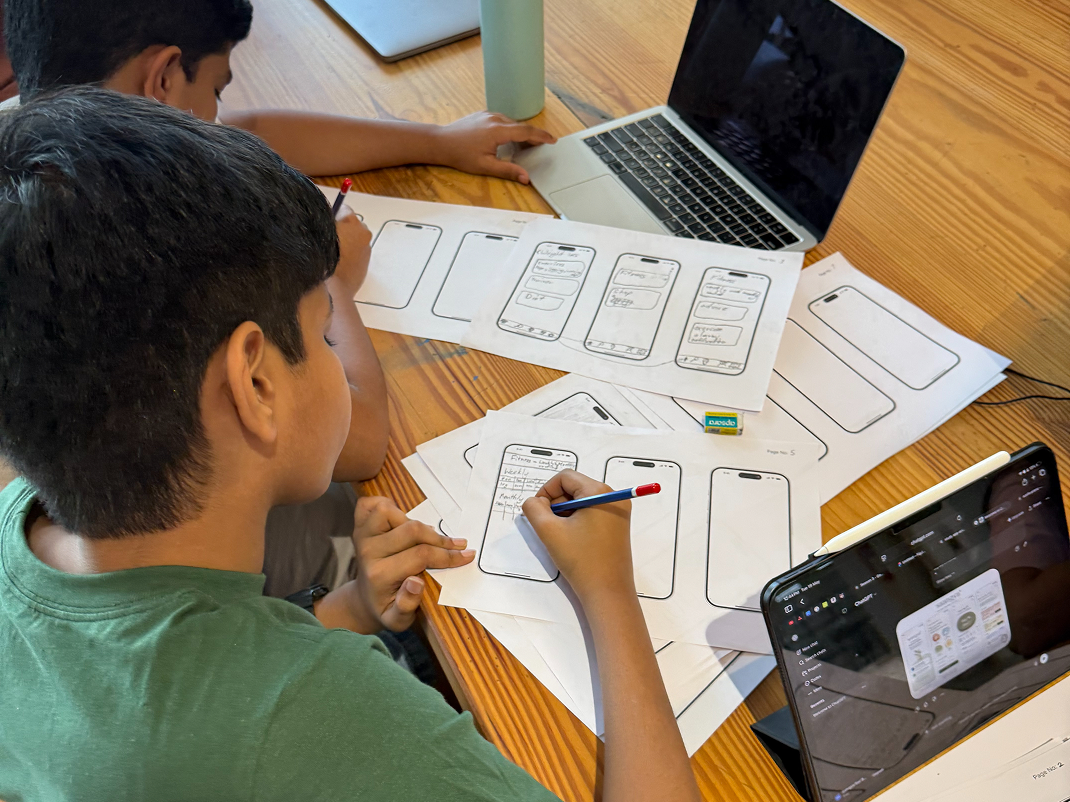
Earlier this year, we spent two weeks with students from 7th Grade to 11th Grade, introducing them to UI/UX design. For many of them, it was their first time hearing terms like wireframe, prototype, or even Figma. None of them had designed an app before.
Our goal wasn't to teach them every feature in Figma or make them professional designers in two weeks. We wanted to help them look at everyday problems differently and understand that good design starts with people, not screens.
By the end of the workshop, they had built working prototypes, presented their ideas, and, more importantly, started asking better questions. Looking back, here are a few moments that stayed with us.
The First Challenge Wasn't the Software
On the first day, we expected students to struggle with learning a new design tool. Surprisingly, that wasn't the biggest hurdle.
The difficult part was getting them comfortable with the idea that there isn't always one correct answer.
Most of them were used to classrooms where questions have fixed solutions. When we asked them to think of a problem they personally experienced and design an app around it, the room became noticeably quieter. Instead of immediately sketching ideas, many students looked around, hoping someone would tell them where to begin.
One student laughed and said,
"Can you just tell us what to make?"
It was a simple question, but it reflected something important. They were waiting for instructions. We wanted them to trust their own observations instead.
That shift didn't happen in an hour. It took conversations, brainstorming sessions, and plenty of reassurance that there wasn't a "perfect" answer.
Learning to Think Before Designing
Once students became comfortable sharing ideas, they started noticing problems everywhere.
Some wanted a better way to keep track of homework. Others wanted to improve communication between students and teachers. One group designed an app to help students discover clubs and activities based on their interests.
Another team came up with an idea for a simple wellbeing check-in tool that would let students quietly communicate how they were feeling.
None of these ideas came from us.
They came from the students themselves after observing their own school life.
That reminded us that children don't struggle to come up with ideas — they simply need the confidence and space to explore them.
The Question That Changed Everything
Around the middle of the workshop, one student was focused almost entirely on making her screens look "cool."
She had found design inspiration online and was trying to recreate the same style.
The screens looked polished, but something felt missing.
Instead of suggesting visual changes, we asked one question:
"Who is this app actually for?"
She paused for a moment before replying,
"Students like me who get nervous in unfamiliar places."
That conversation completely changed her approach.
She simplified the interface, increased the text size, adjusted the colours, and removed elements that weren't helping users. Her final design wasn't the flashiest in the classroom, but every design decision had a reason behind it.
That was the moment we realised students were beginning to understand what user-centred design really means.
Watching Them Collaborate
One of the most enjoyable parts of the workshop was watching students work together.
Initially, discussions revolved around colours and fonts.
A few days later, conversations sounded very different.
"Would someone understand this button?"
"What happens if they press this first?"
"This screen feels confusing."
Without being asked, they started testing each other's prototypes and giving feedback.
Not every suggestion was perfect, but they were beginning to look at products through the eyes of a user instead of a designer.
That change in perspective is difficult to teach through lectures alone.
It Wasn't Always Easy
There were plenty of moments where things didn't go according to plan.
Some students picked up Figma within minutes, while others needed much more guidance. A few found it frustrating when their ideas didn't translate onto the screen the way they imagined.
Receiving feedback was another challenge.
Many students initially assumed that if someone suggested improvements, it meant their work wasn't good enough.
Gradually, they realised that design feedback isn't about pointing out mistakes — it's about making ideas stronger.
By the final presentations, students were confidently explaining why they had made certain design decisions and asking classmates for suggestions to improve them further.
Seeing that growth was just as rewarding as the prototypes themselves.
What We Took Away
Before running this programme, we thought we'd mainly be teaching students how digital products are designed.
Instead, we found ourselves helping them build skills that go far beyond design.
They learned how to ask thoughtful questions, listen to different perspectives, solve problems creatively, and improve ideas through iteration.
Those are skills they'll use whether they become designers, engineers, entrepreneurs, teachers, or something completely different.
The prototypes they created were impressive, but what mattered more was the way they approached problems by the end of the workshop.
They were curious.
They were willing to experiment.
And they weren't afraid to change their minds after receiving feedback.
Looking Ahead
We're already thinking about how to improve the next workshop.
One thing we'd like to spend more time on is user testing. Giving students the opportunity to watch real people interact with their prototypes would help them understand that design is an ongoing process, not something that ends once the screens look good.
We'll also dedicate more time at the beginning to helping students identify meaningful problems before they start designing solutions.
Because we learned that the strongest projects didn't begin with great visuals — they began with genuine observations.
Final Thoughts
When people hear "UI/UX," they often imagine screens, software, and technology. After two weeks with these students, that's not what we'll remember.
We'll remember the questions they learned to ask.
We'll remember the moments they changed their minds after hearing another perspective.
We'll remember the confidence that slowly replaced the need for someone else to provide the "right answer."
Figma was simply the medium. The real outcome wasn't a collection of prototypes.
It was a classroom full of students who had started looking at the world differently — spotting problems, questioning assumptions, and believing they could create something that made another person's life a little better.
Perhaps that's the most important thing design education can offer: not the ability to build better apps, but the confidence to build better solutions wherever life takes them.